Geo-Social Lab

News archive

Publications, presentations, awards, student research, and lab activities.

Major research program

CAMSA: Cancer Analytics & Maps for Small Areas

An NIH/NCI-funded research program developing statistically informed small-area cancer estimates and user-centered interactive maps to make cancer data more accessible and interpretable across diverse communities.

CAMSA addresses a persistent challenge in cancer surveillance: reliable, interpretable information is often unavailable for small geographic areas where sparse counts and confidentiality constraints limit conventional reporting.

The project combines statistical modeling, geovisualization, user-centered design, uncertainty communication, and interactive mapping. CAMSA supports cancer-data exploration at ZIP code and county levels and is designed for public health professionals, researchers, patients and advocates, and other community users.

Two CAMSA-related papers are currently published, with additional work in review and preparation.

Research outputs

CAMSA publications

2026

Wisler Gerdes, E. O., Cai, J., Mahoney, C., Brown, G. D., Clark, J., Charlton, M. E., Koylu, C., Roberts, E., McKelvey, B., Wiggins, C. L., Meisner, A. W., Christian, W. J., Huang, B., Oleson, J. J., & Nash, S. H. Estimating Small Area Statistics and Developing a Novel Mapping Tool to Display Them Using a User-Centered Design Process. JCO Clinical Cancer Informatics, 10(2).

View DOI
2025

Cai, J., Wisler Gerdes, E. O., Mahoney, C., Brown, G. D., Clark, J., Charlton, M. E., Roberts, E., McKelvey, B., Wiggins, C. L., Meisner, A. W., Christian, W. J., Huang, B., Oleson, J. J., Nash, S. H., & Koylu, C. Understanding Users in Small Area Cancer Mapping: Insights from the Early Stages of a User-Centered Design Process. Advances in Cartography and GIScience of the International Cartographic Association, 5, 7.

View DOI

Additional CAMSA publications are in review and preparation.

In the media

Press coverage

Broadcast coverage

CAMSA on television

Three television segments highlighted the CAMSA project and its potential to make small-area cancer patterns more visible and accessible.

June, 2026

New paper: Wisler Gerdes, E. O., Cai, J., Mahoney, C., Brown, G. D., Clark, J., Charlton, M. E., Koylu, C., Roberts, E., McKelvey, B., Wiggins, C. L., Meisner, A. W., Christian, W. J., Huang, B., Oleson, J. J., & Nash, S. H. (2026). Estimating Small Area Statistics and Developing a Novel Mapping Tool to Display Them Using a User-Centered Design Process. JCO Clinical Cancer Informatics, 10(2). DOI

December, 2025

New paper by lab alumnus Dr. Hoeyun Kwon and Dr. Caglar Koylu: Kwon, H., & Koylu, C. (2026). How We Measure Mobility Matters: Comparing Mobility Change Metrics and Their Associations with Social Vulnerability During the COVID-19 Pandemic. Annals of the American Association of Geographers, 116(3), 697–719. DOI

November, 2025

New paper: Koylu, C., Kasakoff, A. B., & Torkashvand, M. (2025). Settlement and the intergenerational dispersion of kin as a spatial process in the nineteenth century US. The History of the Family. DOI

October, 2025

New paper by Jinyi Cai and collaborators: Cai, J., Wisler Gerdes, E. O., Mahoney, C., Brown, G. D., Clark, J., Charlton, M. E., Roberts, E., McKelvey, B., Wiggins, C. L., Meisner, A. W., Christian, W. J., Huang, B., Oleson, J. J., Nash, S. H., & Koylu, C. (2025). Understanding Users in Small Area Cancer Mapping: Insights from the Early Stages of a User-Centered Design Process. Advances in Cartography and GIScience of the International Cartographic Association, 5, 7. DOI

July, 2025

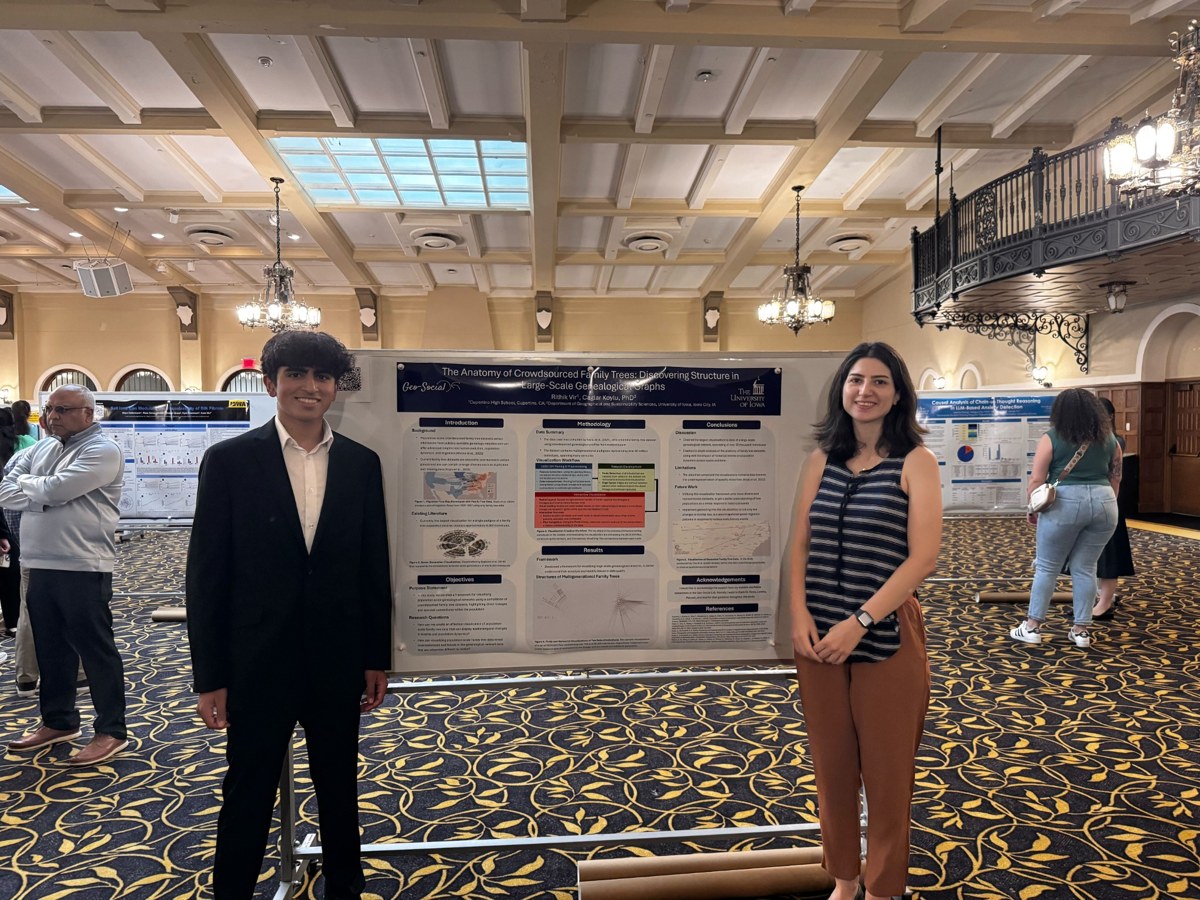
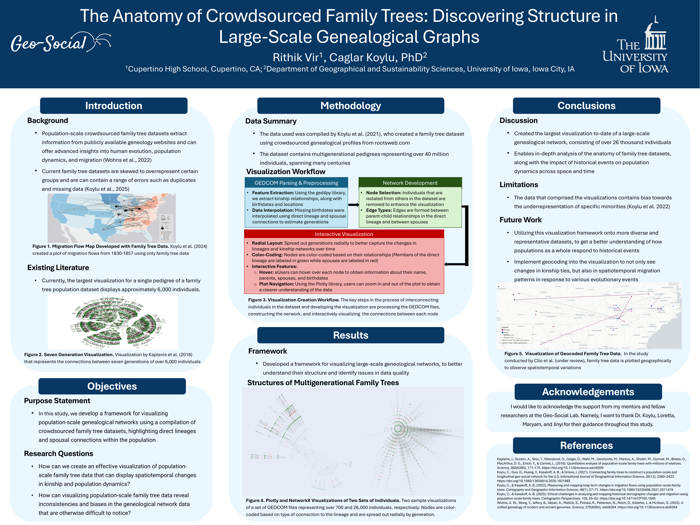
Rithik Vir, our high school researcher, joined the Geo-Social Lab this summer through the Secondary Student Training Program (SSTP) at the University of Iowa. He presented his poster, The Anatomy of Crowdsourced Family Trees: Discovering Structure in Large-Scale Genealogical Graphs.

Click for Rithik's research poster!

December, 2024

New paper: Koylu, C., & Kasakoff, A. B. (2025). Ethical Challenges in Analyzing and Mapping Historical Demographic Changes and Migration Using Population-Scale Family Trees PDF https://doi.org/10.14714/CP105.1945

October, 2024

Loretta presented Roots & Migrants: A user-centered story map application for understanding and teaching historical population dynamics and migration in the U.S. at NACIS 2024 in Tacoma, WA.

New collaborative paper: A research agenda for GIScience in a time of disruptions

August, 2024

As part of the NSF-funded BluGAP project, Maryam developed the “Rivers and Risks” interactive story map to bridge the gap between spatial analysts and watershed communities and foster collaboration in river protection.

July, 2024

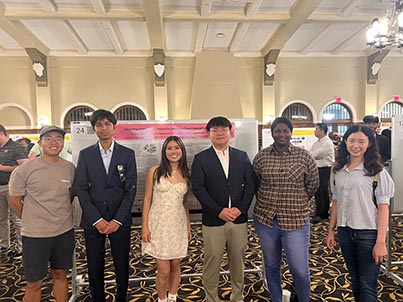
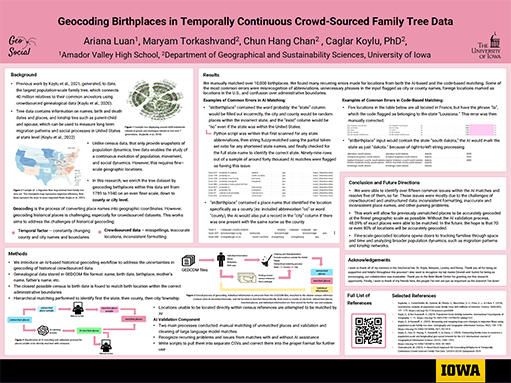
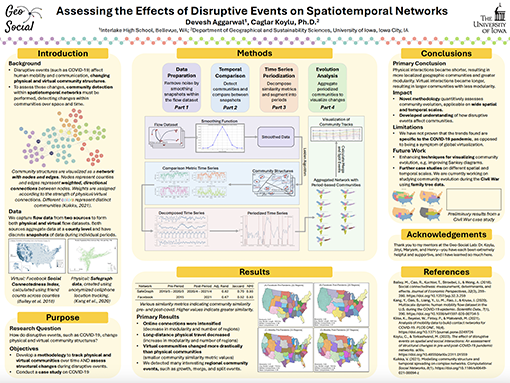
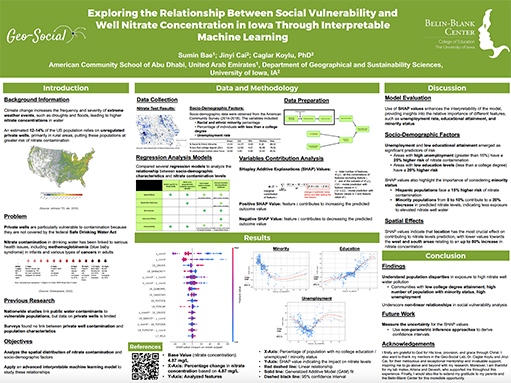
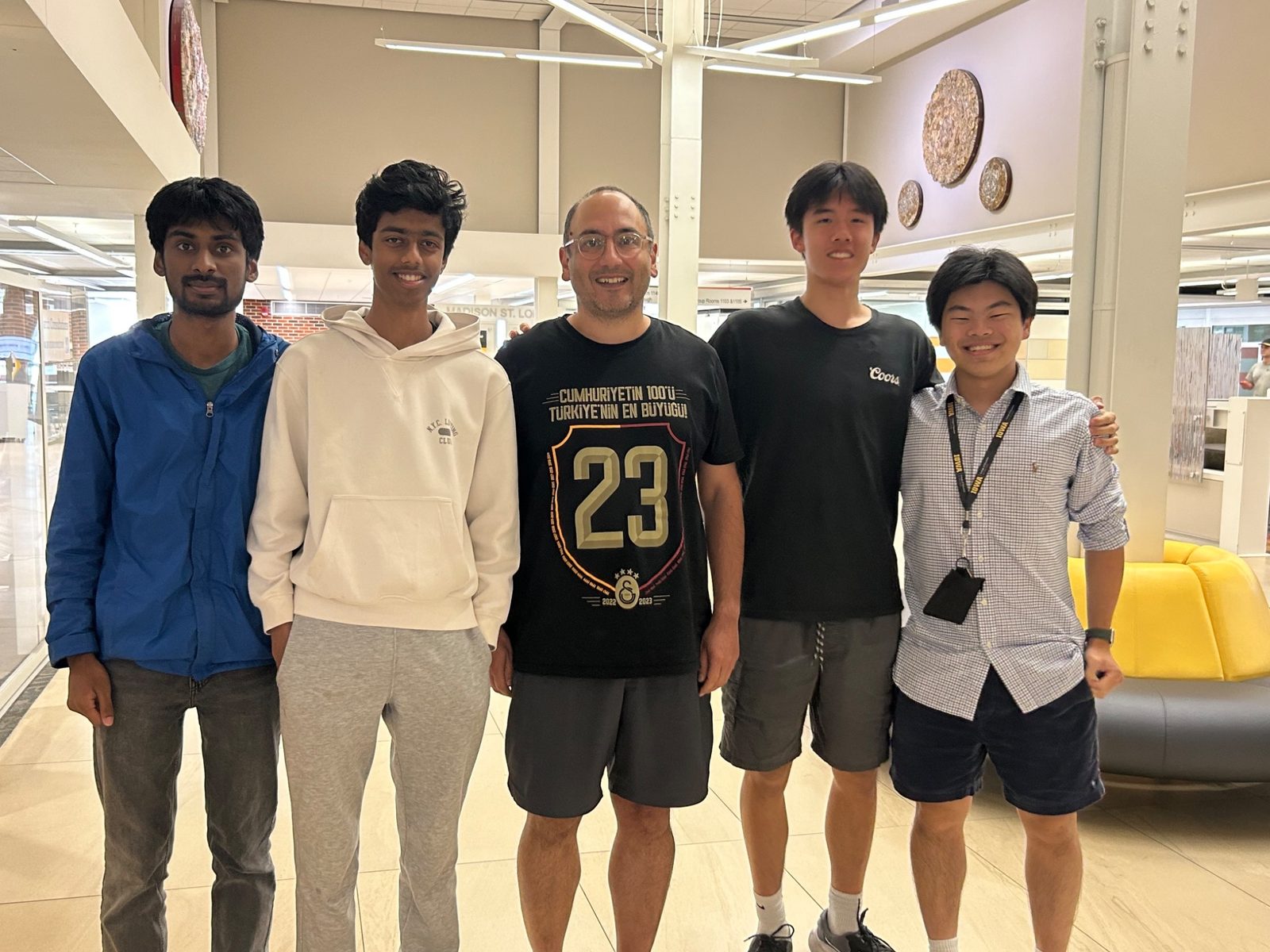
Ariana Luan, Devesh Aggarwal, and Sumin Bae, our high school researchers, joined our lab this summer to participate in the Secondary Student Training Program (SSTP) at the University of Iowa.

June, 2024

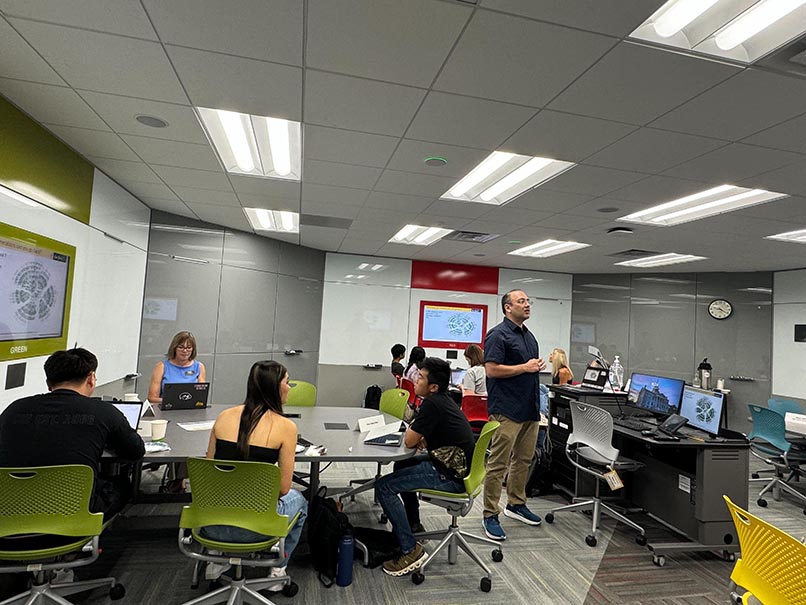
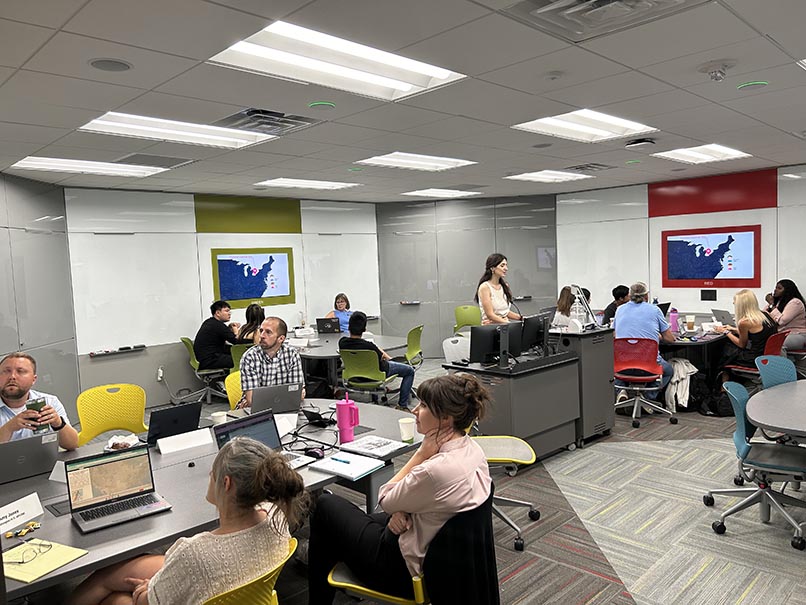
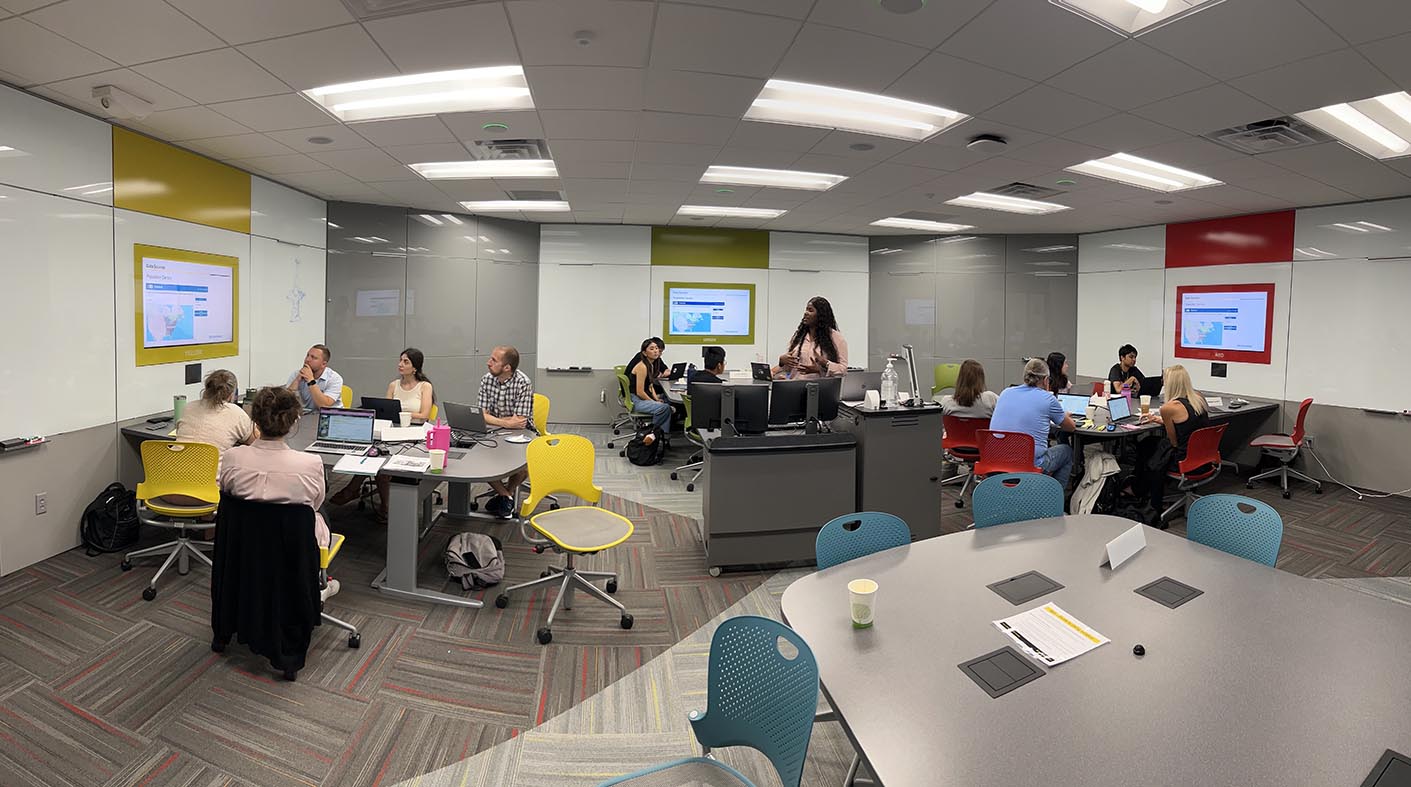
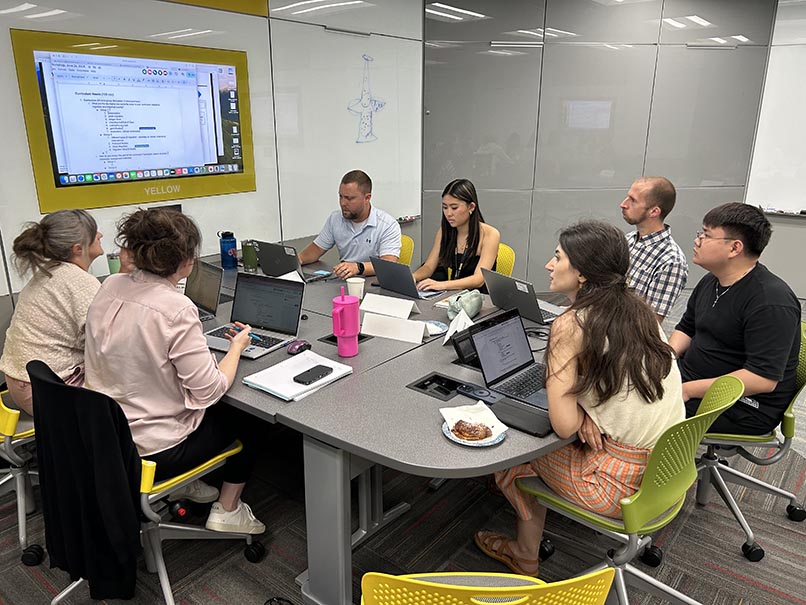
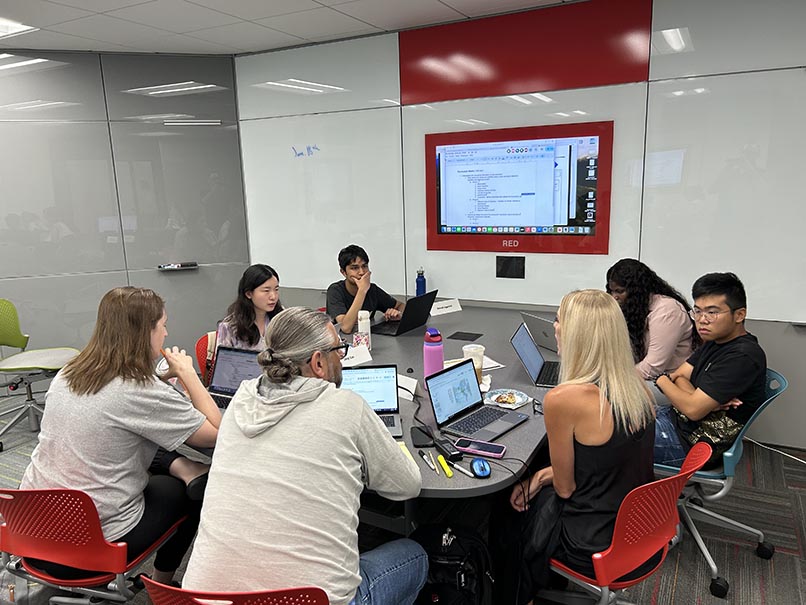
On June 26, 2024, The Geo-Social Lab hosted the first NSF-sponsored workshop connecting high school teachers and students for the development of "Roots & Migrants", an online educational tool for enhancing public scientific literacy on U.S. history, migration, and kinship networks.

Roots & Migrants workshop photo 1, June 2024 Roots & Migrants workshop photo 2, June 2024 Roots & Migrants workshop photo 3, June 2024 Roots & Migrants workshop photo 4, June 2024 Roots & Migrants workshop photo 5, June 2024

CaGIS+UCGIS Symposium at The Ohio State University, Columbus, OH

Caglar participated on a panel about the curriculum needs that can respond to and shape the direction of GIScience in an age of scientific disruption.

Maryam won the best student paper award with her paper on 'A Hierarchical Approach for Geocoding Birthplaces in Temporally Continuous Crowd-Sourced Family Tree Data'.

Jinyi presented our research on 'Social Vulnerability and Exposure to Private Well Nitrate Contamination in Iowa: An Interpretable Machine Learning Approach'.

October, 2023

Jinyi presented her research on the Curriculum Design of Artificial Intelligence and Sustainability in Secondary School at the I-GUIDE Forum 2023, October 4, 2023, New York, NY. Read the conference proceeding

Hoeyun published the first paper of her dissertation, "Natural language processing meets spatial time series analysis and geovisualization: Identifying and visualizing spatio-topical sentiment trends on Twitter", in Cartography and Geographic Information Science.Preprint available

Caglar presented FlowMapper.org: Flow Mapping Made Easy! at NACIS 2023 Practical Cartography Day in Pittsburgh, PA. Watch the presentation on YouTube

September, 2023

Caglar gave a seminar “Giant Family Trees in Human Geography: Preliminary Results from US 1789 to 1930”, at University College London, UK.

Caglar presented the paper co-authored with Maryam "The effect of disruptive events on spatial and social interactions: An assessment of structural changes in pre-and post-COVID-19 pandemic networks” at the GIScience 2023 Workshop on Disruptive Movement Analysis (DMA’23), Leeds, UK.

May, 2023

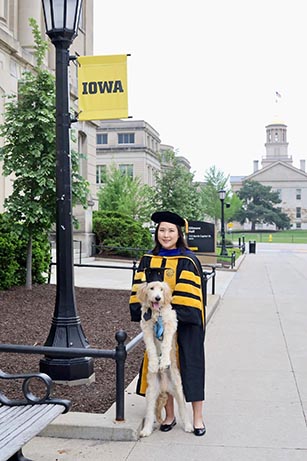
Hoeyun succesfully defended her Ph.D. on May 8, 2023, and is now a Ph.D! Congrats Dr. Kwon! Dr. Kwon will continue her journey as a postdoc in University of Colorado Boulder! Learn more about Hoeyun!

Geo-Social Lab news image, May, 2023

January, 2023

Caglar was elected as the Vice President of Cartography and Geographic Information Society (CaGIS)! Read More

November, 2022

Hoeyun Kwon presented our research on the unequal impact of COVID-19 by analyzing the mobility behaviors of socially vulnerable populations at the AutoCarto 2022 conference held at Redlands, CA. Watch the presentation on YouTube

Maryam presented our research on mapping migration regions and their evolution from population-scale family trees at The 6th ACM SIGSPATIAL Workshop on Geospatial Humanities (GeoHumanities’22), November 1, 2022, Seattle, WA. Read the conference proceeding

September, 2022

Super excited to announce NSF funding ($477,734) of our project on population-scale kinship networks and migration! Public abstract

August, 2022

Welcome to Fall 2022 and our new Ph.D. Student, Maryam Torkashvand!

Geo-Social Lab news image, August, 2022

May, 2022

Very excited to collaborate with Jacob Oleson (Biostatistics) on National Cancer Institute (NCI) funded project ($1,188,804), "Development of Small Area Interactive Risk Maps for Cancer Control Efforts". Public abstract

March, 2022

Hoeyun Kwon won the second place in GIS Specialty Group Student Honors Paper Competition at AAG 2022! Congrats Hoeyun!

February, 2022

Our paper "Measuring and mapping long-term changes in migration flows using population-scale family tree data" have been featured on the cover of Cartography and Geographic Information Science!

Geo-Social Lab news image, February, 2022

December, 2021

Congrats for Hoeyun Kwon for successfully defending her dissertation proposal and becoming a Ph.D. candidate!

November, 2021

Our paper "Measuring and mapping long-term changes in migration flows using population-scale family tree data" has been accepted for publication in Cartography and Geographic Information Science!Preprint available

October, 2021

Our paper "FlowMapper.org: A web-based framework for designing origin-destination flow maps" has been accepted for publication in Journal of Maps! Check Flowmapper! Check out the preprint!

September, 2021

Hoeyun Kwon presented our research on the relationship between human mobility and COVID-19 prevalence at GIScience 2021 workshop on Advancing Movement Data Science (AMD’21). Click for Hoeyun's blog post!

Geng Tian updates us on how he is doing in China, working on a very cool project - unmanned vehicles delivering food! Click for Geng's blog post!

August, 2021

Kaitlyn Hom and Mark Rifkin, both senior high school students, joined our lab this summer to participate in the Secondary Student Training Program (SSTP) at the University of Iowa.

Click for Kaitlyn's blog post!

Click for Mark's blog post!

Angelina Evans worked as an intern in the US Department of Energy's prestigious Science Undergraduate Laboratory Internship (SULI) program in the Geospatial Science and Human Security Division at Oak Ridge National Laboratory (ORNL). Click for Angelina's blog post!